Most traders focus on what they can see, like pricing, charts, execution speed, and leverage conditions. These are the visible parts of trading. But a large part of your trading experience depends on systems you never directly interact with.

Every time you log in, upload documents, fund an account, withdraw profits, or contact support, you are relying on operational processes running quietly in the background. If those processes are poorly designed or inconsistently managed, problems tend to appear in the form of delays, confusion, or security concerns.

That is why ISO certifications exist to evaluate exactly these behind-the-scenes things. They are internationally recognised standards used to assess how organisations manage security, privacy, and operational continuity in a structured and consistent way.

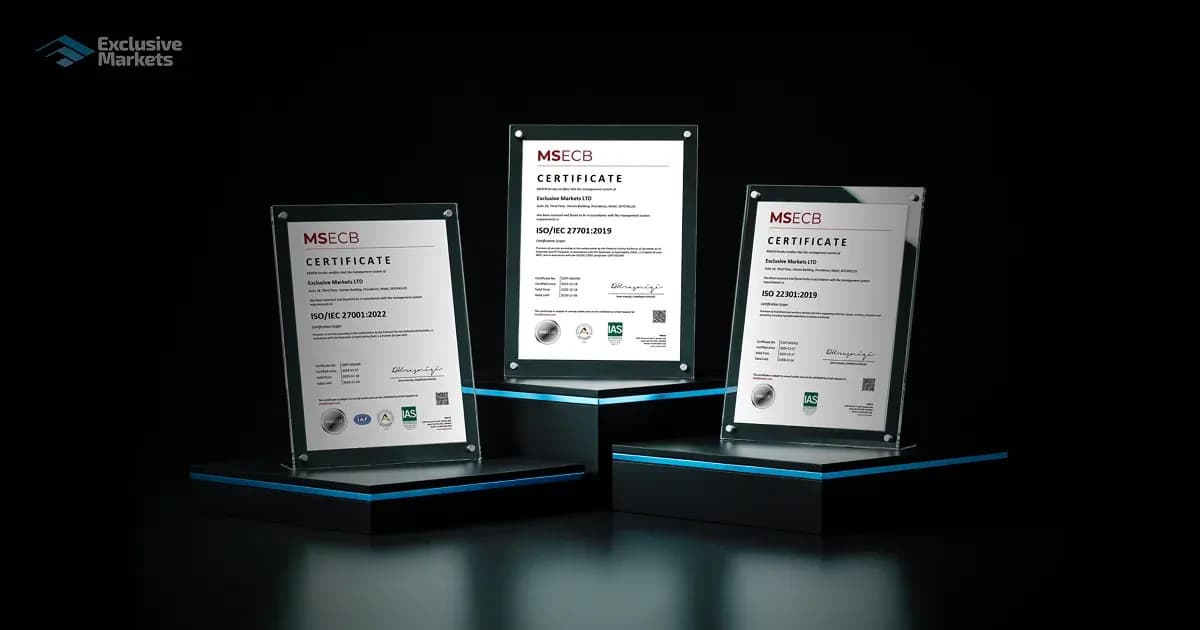
This blog explains what forex trading ISO Certification mean in practical terms, why they matter in trading, and how they shape the way Exclusive Markets manages the operational foundations that support your trading experience.

What do ISO certifications mean in practice?

ISO stands for the International Organisation for Standardisation, which develops globally recognised standards that define how organisations should manage specific areas of risk. An ISO certification does not assess whether a company is “good” or “bad.” Instead, it evaluates whether the organisation operates a formal management system, a documented, repeatable approach to identifying risks, applying controls, monitoring performance, and improving over time.

For a broker, this means critical responsibilities are not handled informally or based on individual judgment. Security, privacy, and operational continuity are managed through written procedures, clearly defined roles, internal oversight, and regular independent audits to ensure those processes are followed consistently.

In short, they demonstrate that essential operations are managed as structured systems, not assumptions.

But why is the importance of ISO certification for traders, even if you never see it?

Trading relies on trust. Not just trust in prices or platforms, but trust that your account, data, and funds are handled properly at all times.

A broker processes sensitive information such as identity documents, contact details, transaction records, and platform access logs. It also depends on multiple internal teams and external service providers working together.

Without structured controls, small operational weaknesses can quickly become trader-facing problems. This might look like delayed withdrawals, inconsistent verification requests, unclear support responses, or prolonged platform disruptions.

ISO-certified systems are designed to reduce these risks by enforcing consistency, accountability, and preparedness across the organisation.

ISO/IEC 27001 for Information Security Management

ISO/IEC 27001 is the global standard for information security management systems. It focuses on how an organisation protects information across people, processes, and technology.

This standard requires a broker to identify sensitive information, understand the risks surrounding it, and implement controls to protect it from unauthorised access, misuse, or loss. It also emphasises monitoring, incident handling, and continuous improvement.

For traders, ISO/IEC 27001 supports stronger protection of account access and sensitive documents such as identity verification files and payment records. Access to this information is governed by defined rules, limited to authorised roles, and regularly reviewed. When security issues arise, there are documented procedures to investigate, respond, and mitigate impact in a consistent manner.

While no security framework can eliminate risk entirely, a structured information security system significantly improves how risks are managed and how incidents are handled.

ISO/IEC 27701 for Privacy Information Management

ISO/IEC 27701 builds on information security by focusing specifically on personal data and privacy governance. It helps organisations manage how personal information is collected, used, stored, shared, and retained.

This particular ISO certification for trading company introduces clarity around why personal data is required and ensures that it is handled in line with defined purposes and responsibilities. It also requires organisations to assess privacy risks and document how those risks are addressed.

For traders, ISO/IEC 27701 supports more transparent and consistent handling of personal information during onboarding, verification, and ongoing account management. It reduces unnecessary data duplication, improves traceability when privacy questions arise, and helps ensure that personal data is not accessed or shared without clear justification.

Effective privacy management helps create a smoother experience by reducing avoidable friction while maintaining appropriate compliance controls.

ISO 22301 for Business Continuity Management

ISO 22301 is the international standard for business continuity management systems. It focuses on preparing organisations to continue operating during disruptions such as technical failures, external service outages, or unexpected operational events.

This standard requires identifying critical services, planning recovery strategies, assigning responsibilities during incidents, and regularly testing response plans. The goal is not to prevent every disruption, but to improve readiness, response, and recovery.

For traders, ISO 22301 supports greater operational resilience. It helps reduce prolonged service interruptions, improves coordination during incidents, and supports clearer communication when issues occur. It also strengthens planning around third-party dependencies, which are a key part of modern trading infrastructure.

Why do these certifications matter together

Security, privacy, and continuity are closely connected. A security incident can affect personal data. A system disruption can impact access to accounts or withdrawals. Weak continuity planning can amplify the effects of technical failures.

Managing these risks through separate or informal processes creates gaps. But managing them through integrated, audited systems improves overall stability and consistency. By aligning information security, privacy management, and business continuity under recognised ISO standards, Exclusive Markets strengthens the operational foundation that supports traders across different market conditions.

What does this mean for your trading experience?

You may never interact directly with these management systems, but their impact is felt in everyday trading activities.

Structured operational controls help protect account access, support responsible handling of personal data, and improve preparedness during periods of market stress or system disruption. They also promote consistency in how support, verification, and incident response processes are handled.

For traders, this operational discipline contributes to a more predictable, transparent, and reliable trading environment.

Conclusion

ISO certification for trading company is not a marketing label. They are frameworks designed to ensure that critical operational risks are managed through documented systems, regular reviews, and independent audits.

By operating under ISO/IEC 27001, ISO/IEC 27701, and ISO 22301, Exclusive Markets demonstrates a structured approach to information security, privacy governance, and business continuity.

These systems form an important part of the infrastructure that supports secure access, responsible data handling, and resilient trading operations.

Are you Ready to Explore the World of Trading?

Disclaimer: The information provided on this blog is for educational/informational purposes only and should not be considered financial/investment advice. Trading carries a high level of risk, and you should only trade with capital you can afford to lose. Past performance is not indicative of future results. We do not guarantee the accuracy or completeness of the information presented, and we disclaim all liability for any losses incurred from reliance on this content.